

Picture a world where the very vegetables meant to nourish you become a challenge to consume. For those grappling with autoimmune issues, this struggle is all too familiar.
From my earliest days, I harbored an affinity for vegetables, irrespective of their appearance, taste, or aroma. I was always willing to give them a chance.
My grandmother, a lifelong cultivator of her own sustenance, wove a tapestry of flavors in a dish known as Mieng, a LAO salad. This culinary masterpiece featured a medley of wild, organic vegetables, fruits, and herbs plucked straight from our farm and garden. The vibrant, earthy hues mirrored the picture I’ll unveil in my upcoming post. Should you wish, I’ll gladly share the intricacies of this recipe with you.
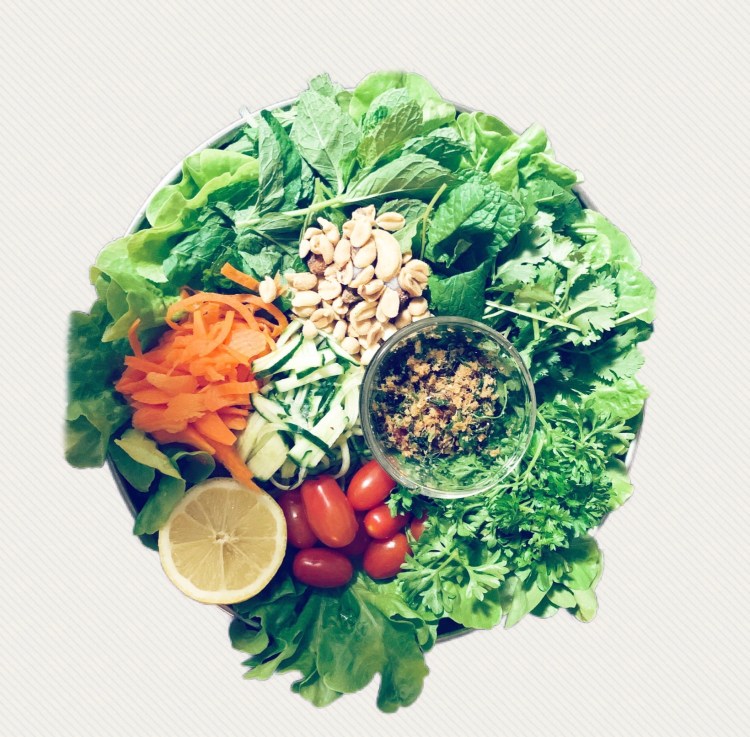
In the aftermath of my Systematic Scleroderma diagnosis, the revelation that some beloved vegetables and fruits were off-limits left me grappling with devastation and denial. Despite the knowledge that these dietary choices inflicted excruciating consequences, I persisted in consuming them, bearing the toll of joint pain, itching skin, swelling extremities, acid reflux, fatigue, and brain fog.
The forbidden list encompassed cruciferous vegetables, onions, garlic, nightshades, and high-sugar fruits. Gradually, I discerned a profound connection between my external afflictions and the underlying lung fibrosis. This revelation prompted the abandonment of the listed vegetables and fruits, in addition to grains, as their consumption intensified my struggles with shortness of breath, persistent dry cough, and fatigue.
The dwindling options in my dietary repertoire led me to explore alternative vegetables, and in this quest, I discovered a newfound alliance with herbs. Basil, dill, mint, and parsley emerged as my go-to greens, compensating for the void left by the likes of cabbage, cauliflower, broccoli, onions, and garlic. The once-beloved flavors of onion curry now trigger instant bloating, reflux, and the prolonged agony of joint pain and swelling, necessitating weeks of recovery through body detox.
Embracing herbs as my culinary companions brought forth positive transformations. Basil, in its various forms, from Sweet Basil to Holy Basil, enriched my diet with vitamins A and K, magnesium, manganese, and iron. Dill, viewed as a medicinal herb, contributed anti-fungal and antibacterial properties, potentially aiding in the elimination of unwanted parasites. Mint, a versatile herb, not only graced households but also gained popularity for detoxifying concoctions. Finally, parsley, with its sweet and subtle flavor, became a staple in my dishes, boasting an array of benefits, including high vitamin and mineral content.
These herbs, laden with vitamin A and C, substantial minerals, and minimal carbohydrates, proved not only a flavorful substitute but also a source of immense health benefits. Combining them in dishes like Mieng or Lao Salad unveiled intense flavors that, with perseverance, became a acquired taste. These herbs, akin to medicinal treasures, offer a holistic approach to health and well-being.
 Radiant Life Journey